by Christina | Jun 10, 2026 | 2026, Blog
This post is taken from the upcoming book The Hidden Buyer Journey for more information on the book see this link.
There is a question that every sales and marketing leader should be asking right now, and almost none of them are: What kind of selling relationship are we actually in?
Not which CRM you use. Not which cadence tool you’ve deployed or which AI platform you’re evaluating. The relationship itself – the fundamental nature of how your organization connects with buyers. Because that question, more than any tool or technology decision you’ll make this year, determines whether you win or lose the deals that matter most.
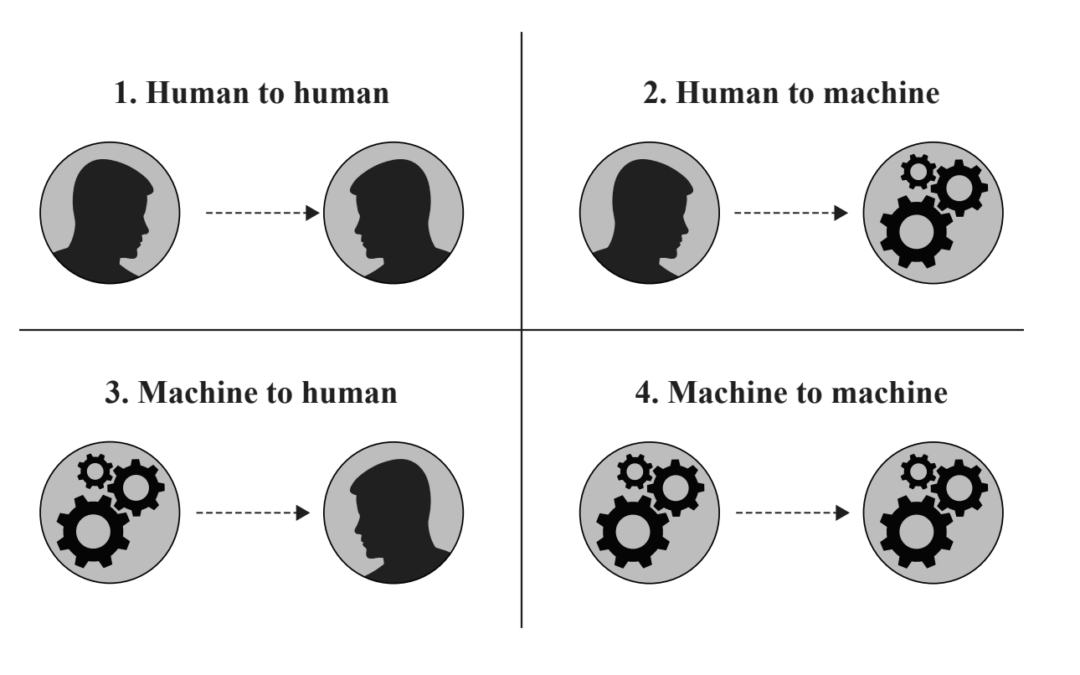
There are four selling relationships that now define B2B commerce. Three of them are scaling faster than anyone predicted. One of them is quietly disappearing. And it happens to be the only one that has ever reliably closed a complex deal.
Machine-to-Machine
The first relationship requires no human involvement on either side. Algorithms are buying from algorithms. Automated procurement systems are evaluating, selecting, and transacting with automated selling systems. No relationship is built. No trust is earned. No human judgment is involved.
This relationship is efficient, scalable, and completely devoid of the connection that built commerce in the first place. For renewals, replenishment, and transactional purchases, it works. For anything complex, anything that requires a buyer to take a real risk with their organization’s money and their own reputation, it falls short of what’s needed.
Machine-to-Human
The second relationship is what greets most buyers before they ever speak to a rep. The automated email sequence. The personalized ad served by an algorithm that knows their job title and their browsing history. The chatbot that answers their first question. The triggered nurture campaign that follows them through a journey the selling organization designed but doesn’t actually see.
By the time a human seller enters the conversation, the buyer has already formed an impression – shaped entirely by machines that know what the buyer does but nothing about who they actually are. Their personality. Their personal risk. Their motivations. Their fears. None of that is captured in the data feeding the machine.
Human-to-Machine
The third relationship is where most sales reps actually live – and it’s the one that gets talked about the least. The rep is technically in the process, but they’re selling into a machine rather than to a person. Entering data into a CRM. Working system-generated call queues. Following algorithm-determined priorities. Submitting proposals through procurement portals. Responding to automated RFP systems.
The rep’s judgment, intuition, and ability to read a room have been systematically replaced by process. They’re executing a workflow rather than building a relationship. And the machine on the other end doesn’t trust, doesn’t feel, and doesn’t stake its reputation on anything.
Human-to-Human
The fourth relationship is the one that built every great sales organization in history. It’s where trust gets built, where personality gets read, where a buyer decides whether the person across the table is worth staking their reputation on. It’s the relationship where a rep earns the right to be chosen – not because their product scored highest in the evaluation matrix, but because the buyer believes in the person behind the promise.
And it’s being squeezed into whatever time is left over after the other three relationships have consumed the rep’s day. Which, for most reps, isn’t much.
The Uncomfortable Truth
We gave up on it. Not intentionally. Not all at once. But incrementally, deal by deal, quarter by quarter, as performance metrics declined and the industry kept reaching for the same answer – more automation, more volume, more technology. When email open rates fell, we sent more emails. When win rates dropped, we added another tool to the stack.
What we never stopped to ask was whether the problem was our understanding of the human side of the equation. Not because humans were failing, but because we had built systems that were blind to everything that makes a human buyer tick.
The hidden motivations. The personality driving the decision. The personal risk attached to every significant purchase. None of that appears in a lead score or an engagement metric. And because we couldn’t measure it, we stopped looking for it.
The research is unambiguous. Buyers are more emotionally driven than any of our systems acknowledge. The factors that actually determine whether a deal closes – trust, credibility, personal connection, and a genuine understanding of what the buyer is risking – are human factors. They always have been.
AI will accelerate all of this. The first three relationships will scale in ways we can’t yet fully predict. But here’s what the data shows, across thousands of buyers and hundreds of real deals: the human-to-human relationship is still the one that closes.
The sellers who win in the age of AI won’t be the ones who automate the most. They’ll be the ones who are most irreplaceably human. That turns out to be the most competitive advantage left in modern B2B selling.
The question is whether you’re investing in it.
This post came from the upcoming book The Hidden Buyer Journey for more information on the book see this link.
by Christina | May 20, 2026 | 2026, Blog
This post is an excerpt taken from the upcoming book The Hidden Buyer Journey, to read more click here.
Here is a question worth sitting with: if a researcher called your customers tomorrow and asked them about their buying experience, would they mention you by name?
Not your company. Not your product.
You, specifically. By name.
For most sales professionals, the honest answer is probably no. And that’s not an indictment of their effort or their intentions. It’s a reflection of how B2B selling has been structured for the past two decades — around process, pipeline stages, and quarterly targets rather than around the human being on the other side of the deal.
Ben is the exception that proves the rule.
We Weren’t Looking for Ben
We didn’t go looking for Ben. We were conducting customer research for a private equity firm that had acquired several companies and was evaluating how to consolidate their brands. The goal was straightforward: interview existing customers, understand the strengths and weaknesses of the brand, and surface the insights that would inform the go-forward strategy.
We interviewed dozens of customers across multiple acquired companies. We were asking about brand perception, buying experience, product satisfaction — the usual territory. And then something unusual started happening.
A name kept coming up.
Not a product name. Not a company name. A person’s name. Ben.
What made this remarkable wasn’t just that customers remembered him. It was that they remembered him across companies he had never officially sold to. Ben sold products across three of the acquired businesses. But his name surfaced in interviews with customers of all of them — including ones where he had no formal relationship, no account ownership, no territory.
In years of conducting this kind of research, we had never seen anything like it.
What Ben Actually Did
When we dug into why customers kept mentioning Ben, the picture that emerged wasn’t what you might expect. Nobody talked about his pitch. Nobody mentioned his product knowledge in the traditional sense. Nobody brought up his closing technique or his follow-up cadence.
What they talked about was what Ben did for them.
The product team at one company described how Ben had worked directly with their engineering team during product design — showing up not as a vendor trying to protect a sale, but as someone genuinely invested in making sure they had the right components for what they were building. That’s not in anyone’s job description. Ben just did it.
The procurement team at another company explained how Ben had somehow created a consolidated invoice that allowed them to manage purchasing across three separate business units — something the selling company didn’t actually offer as a service. To this day, we’re not entirely sure how he pulled it off. But he did.
And a third company’s buying team simply said: “Ben actually answers his phone.”
That last one landed hardest. In a world of automated sequences, CRM-generated follow-up tasks, and carefully managed response windows, the fact that a human being picked up the phone when you called was memorable enough to mention unprompted in a research interview.
What Ben Was Actually Selling
Here’s the thing about Ben that the traditional sales framework completely misses: he wasn’t selling products. He was selling something far more valuable and far more difficult to replicate.
He was selling himself as the most reliable, knowledgeable, responsive partner his customers had.
The consolidated invoice nobody asked for. The engineering conversations nobody else was having. The phone that actually got answered. None of that appeared in a product brochure. None of it showed up in a CRM field. None of it would have been captured by any intent signal or engagement metric in any marketing platform.
All of it was what kept his name coming up in interview after interview, across companies he’d never even officially sold to.
Ben had figured out — instinctively, without being taught it — that his job wasn’t to sell. His job was to make it easier for people to buy. And in doing so, he had built something that no competitor could undercut on price, no algorithm could replicate at scale, and no automation could replace: genuine trust.
What the Research Tells Us
Ben’s story isn’t just a feel-good anecdote about a talented rep. It’s evidence of something the research confirmed repeatedly across thousands of buyers in fifteen industries.
When customers are asked what actually drove their purchase decision, the top three answers — product quality, usability, and value — are things they can only experience after they’ve already bought. Which means during the sales process itself, they’re not evaluating the product. They’re evaluating something else entirely.
They’re evaluating Promise. Credibility. Trust. And whether the business argument being made feels honest rather than optimistic.
None of those are rational calculations. All of them are emotional judgments about the person in front of them. A buyer doesn’t calculate trust. They feel it. They don’t measure credibility against a rubric. They sense it in how a rep shows up, how much they know, how well they listen.
Ben understood this without being taught it. He wasn’t operating in a machine-to-human world, sending triggered sequences to a list. He wasn’t in a human-to-machine world, entering data and working algorithm-generated queues. He was doing something far simpler and far more powerful.
He was being human, to another human.
The Question Worth Asking
The B2B industry has spent the better part of two decades building systems designed to scale the sales process — to remove the inefficiency, the unpredictability, the human variability from the equation. And those systems have produced exactly what you’d expect: a selling environment where 61% of buyers say they’d prefer a rep-free experience entirely.
Ben is the argument against that trajectory. Not because he was operating without technology or process. But because he never let the technology or process become the point. The point was always the person on the other side of the conversation.
In our research, the most effective predictor of whether a deal closes isn’t the strength of the product, the competitiveness of the pricing, or the sophistication of the marketing automation. It’s whether the buyer trusts the person making the promise.
Ben built that trust across three companies, in an organization he only officially worked for one of, with customers who remembered his name years later in a research interview nobody told them was coming.
That’s not a sales technique. That’s a human one. And in a world that is rapidly automating everything else, it turns out to be the most competitive advantage of all.

by Christina | Apr 29, 2026 | 2026, Blog
I went to a developer conference and accidentally learned something profound about human nature. It started innocently enough – the All Things AI Conference in Durham, NC had a title too good to pass up.
What I didn’t expect was to be the only marketer among 2,500 developers, nodding along as whurly, CEO of Strangeworks (one name, all lowercase), dove deep into quantum computing and AI. I was in over my head. But sometimes that’s exactly where the best insights hide.
It was until Luis Lastras, Director of Language and Multimodal Technology at IBM began talking about “small models” that I finally found something I recognized. Luis said something that struck me that I didn’t realize – and I think I’m not alone – “hallucinations are intentional.” Say what?
According to Luis hallucinations are a way for developers to learn how models work. Because the models operate autonomously they don’t filter out what they output – at least not yet. Think of letting your grandfather who lost his filter loose at a dinner party.
It’s one of things that IBM is working on. Small models validate outputs and commands at various stages in the process to reduce hallucinations.
Anyone who’s worked with AI has experienced hallucination from made up sources to statistics that are just plain wrong. But what Lastras shared was something I didn’t realize, it’s the little extra pieces of information intended to be helpful that AI tools add in that weren’t asked for in the prompt.
For example, he showed a demo of a prompt asking how many moons Mars has and the response came back with two and their names, with the added extra – the distance from Earth which was not requested.
The distance between the planets may have been right but it requires another step to validate which then triggered a fascinating article I had read over the weekend.
In a study by Elon University conducted with 500 AI users (US adults) last year, almost 70% believed that AI models are at least as smart as they are, with 26% believing that they are “a lot smarter.”
What is more concerning is that we believe that AI is thinking like humans. As the article in the Wall Street Journal article Why Even Smart People Believe AI is Really Thinking goes on to say “our cognitive biases developed to help us survive in complex social environments…evolved to view linguistics fluency as a proxy for intelligence, engagement and helpfulness as indicators of trustworthiness.”
The same tendency innate to humans that leads us to trust social creatures who must cooperate for survival are leading us to trust systems that appear to listen, understand and want to help us.
The more AI tools and bots act like humans, the more likely we are to trust them. Which brings us back to the hallucination. The more AI tools act like they’re being helpful, the more likely we are to miss that “little extra” piece of information that wasn’t requested.
The convergence of intentional hallucinations and our deeply wired human instinct to trust fluent, helpful communicators creates a perfect storm of misplaced confidence.
As AI tools grow more sophisticated and human-like, our evolutionary instincts will only make it harder to maintain the critical distance needed to catch the errors, embellishments, and unrequested additions that slip through.
The good news is that awareness is the first step. Whether it’s IBM’s small models validating outputs in real time or simply slowing down to verify what AI hands us, the antidote to a cognitive bias millions of years in the making is something refreshingly simple – a healthy dose of human skepticism.

by Christina | Mar 12, 2026 | 2026, Blog
AI rewards original insight, proprietary data and firsthand experience over length and polish. Here’s how content strategy must evolve.
There was a time when content marketing followed a predictable formula: pick a keyword, write 2,000 words around it, sprinkle in some headers and wait for Google to notice. It worked. Pages that said very little but said it at great length climbed the rankings and stayed there.
That era is ending, and most content teams haven’t realized it yet.
When we read web pages, we start at the top, skim the introduction and decide whether the author sounds smart. Google’s AI processes content differently. It breaks content into small semantic units – individual claims, definitions, data points and explanations – and evaluates each one on its own clarity and usefulness. A 3,000-word article that circles the same idea for 20 paragraphs doesn’t look comprehensive to an AI. It looks redundant.
This is a fundamental shift in how value gets assigned to content. Length used to be a proxy for depth. Now it’s just noise unless every section carries its own weight.
The long, keyword-circling blog posts that once dominated search are quietly losing ground to something leaner and more specific. AI Overview panels, featured snippets and conversational search results all pull from content that answers questions directly. They don’t reward buildup. They don’t care about your brand voice. They care about whether a specific paragraph contains a specific, helpful answer.
The old content playbook – where you’d research what competitors wrote and then write a slightly longer, slightly more polished version – is becoming a dead strategy. If five sites all paraphrase the same general knowledge, they’re not sources. They’re echoes. AI is getting remarkably good at telling the difference.
If you’re not a source, you’re a remix
If you’re not publishing original research, proprietary data or genuine firsthand insight, you’re not creating source material. You’re remixing what already exists. Remixes don’t get cited.
Think about how a large language model builds its responses. It synthesizes information from across the web, but it gravitates toward origin points – the study that produced the statistic, the company that ran the survey, the practitioner who documented what actually happened. Everyone downstream who rephrased that information is, from the AI’s perspective, a less reliable copy.
This isn’t speculation. We can already see it happening. Sites that publish original benchmarks, case studies with real numbers and first-person accounts of specific processes are showing up in AI-generated answers at disproportionate rates. Meanwhile, the ultimate guides that aggregate other people’s findings are getting compressed out of the picture.
Your customers search everywhere. Make sure your brand shows up.
The SEO toolkit you know, plus the AI visibility data you need.
The new content strategy
The path forward is more straightforward than most people want to hear. Stop trying to sound authoritative. Be the source of the information.
That means running your own experiments and publishing the results, even when they’re messy. It means sharing internal data that your industry would find valuable – conversion rates, timelines, costs and failure points. It means writing from experience rather than just research, because experience is something AI can’t fabricate and can’t find anywhere else.
It also means getting comfortable with shorter, more focused content. A 400-word post that introduces a single original insight is worth more in this new landscape than a 4,000-word guide that synthesizes 10 other people’s ideas. One is a source. The other is a summary.
This doesn’t mean writing quality is irrelevant. Poorly structured, confusing content still fails. But the competitive advantage has shifted. Clear thinking matters more than elegant prose. Having something to say matters more than saying it beautifully.
Add something new or don’t publish
The content teams that will thrive in an AI-driven search environment are the ones that treat publishing as a knowledge contribution, not a marketing exercise. Every piece should add something to the conversation that didn’t exist before – a number, result or perspective earned through doing the work.
The question to ask before you hit publish is no longer “Does this rank?” It’s “Would an AI cite this?” If the honest answer is no, you’re not writing content. You’re writing filler.

by Christina | Jan 20, 2026 | 2026, Blog
Most of your best buying signals show up late in the sales cycle, but they’re invisible if the right contacts never make it into your CRM.
This problem has plagued sales and marketing organizations for as long as these functions have existed. Companies invest massive amounts in Martech stacks and sales databases, only to see them underperform – not because of the technology itself, but due to poor input.
Specifically, the issue is qualified, highly engaged contacts held tightly – like clutched pearls – by the sales force.
For years, the prevailing theory has been that sales doesn’t want marketing anywhere near its most valuable relationships. Sales executives often attribute the issue to competing priorities or a general lack of interest in “data entry.” Interpret that however you’d like.
The visibility gap
I’ve encountered this problem repeatedly when trying to map content consumption to the buying journey. Typically, we’re only able to connect 10%–15% of sales contacts to any measurable marketing engagement, such as content downloads, event attendance, or other interactions.
Recently, however, we had the opportunity to take a closer look under the hood.
A client shared their contacts, intent data, engagement data and – most importantly – sales email correspondence tied to active opportunities across more than a dozen accounts. The data covered hundreds of emails exchanged over a seven-month period. In some cases, we observed opportunities at inception; in others, we jumped in midstream and followed them through to close.
We mapped the emails chronologically and tracked every individual included in the conversations. It was only after reviewing the full arc of these communications that the real reason sales reps don’t enter new contacts into the database became clear.
Where are all these names coming from?
The first question we wanted to answer was simple: Where do these new contacts come from – and why?
What we found was remarkably consistent. As deals progress, new contacts tend to appear at three distinct points in the sales process:
- Demo requests: These typically expand the buying group by an average of seven to 10 people.
- Trial setup: This stage typically introduces an additional three to five contacts, often including stakeholders from other geographies within global organizations.
- Final presentation: Procurement and finance frequently enter the picture at this stage, and if the presentation is on-site, even more participants tend to appear.
Why don’t reps enter the names?
Contrary to popular belief, this isn’t about laziness or disinterest. It’s about focus.
As opportunities near closure, activity between the prospect and the sales rep increases – sometimes dramatically. Last-minute trial configurations, contract negotiations and master services agreements consume nearly all of the rep’s time and attention.
The excitement of a potential win – like the smell of blood in the water for sharks – puts reps into a sales frenzy. Their behavior becomes almost entirely reactive.
New contacts who aren’t directly participating in the email threads are viewed as peripheral. In practice, they become invisible. This blind spot is especially pronounced at the very moment when insight matters most.
Why enter them at all? What’s the upside?
What most reps don’t realize – given their narrow focus on closing the deal – is that these late-stage participants are often scrambling to get up to speed.
They visit the corporate website.
- They search for case studies.
- They download white papers.
- They watch on-demand videos.
Their goal is simple: become informed enough to influence the final decision.
That behavior is precisely what makes them valuable.
If – and it’s a big if – reps take the time to enter these contacts into the database, their sudden spike in activity can surface powerful intent signals.
A real-world example
In one opportunity, a CEO entered the buying process shortly before an on-site presentation. The decision came down to the incumbent vendor and our client.
That CEO searched for a specific term more than 35 times over two weeks.
Because the contact was identified, that insight surfaced. The sales team redesigned the final presentation to focus heavily on that topic and directly connect it to the client’s value proposition.
They won the deal.
The fix is cultural, not technical
This isn’t a Salesforce problem.
It isn’t a HubSpot problem.
And it certainly isn’t a marketing problem.
It’s a process and mindset problem.
The most valuable buying signals often appear late in the sales cycle, introduced by stakeholders who weren’t part of the early conversations. When those contacts never make it into the system, organizations lose visibility at the exact moment insight can influence outcomes.
Sales teams don’t need more tools – they need a clearer understanding of the upside. Capturing late-stage contacts isn’t about helping marketing run better reports. It’s about giving sales an unfair advantage: real-time visibility into what decision-makers care about most.
When those contacts are entered, intent data lights up. Content consumption becomes visible. Messaging can be adjusted. Presentations get sharper. Win rates improve.
Until organizations address this blind spot, marketing will continue to look ineffective, intent data will appear incomplete, and sales teams will unknowingly leave leverage on the table.

by Christina | Dec 3, 2025 | 2025, Blog
Now that the dust has settled, the branding agency fired and the old brand restored, it’s a good time to look at what really happened with the rebranding of Cracker Barrel – something the mainstream media largely overlooked.
Let’s start with the firing of the agency behind the rebrand. Prophet – founded by Scott Galloway and Ian Chaplen with David Aaker as vice chairman – is a powerhouse branding firm known for rigorous research and disciplined strategy. This isn’t a group of amateurs crowdsourcing a logo.
Prophet does its homework, has A-list clients and has successfully delivered hundreds of rebranding and branding projects. What went wrong?
How bot activity fueled the rebrand backlash
The most interesting part of this story never made headlines – likely overshadowed by the president’s comments that turned the rebrand into a politicized moment.
What was largely missing from the uproar was the real source of the rapid outrage: bots. According to the Wall Street Journal, bots posing as real users drove a disproportionate share of the social chatter that media outlets picked up. PeakMetrics – which works with the U.S. Air Force to identify foreign misinformation – found that the backlash originated from high-follower human accounts but was quickly amplified by bots.
By August 20, the day after the launch, X saw about 400 Cracker Barrel posts every minute. Molly Dwyer, director of insights at PeakMetrics, said 70% of accounts posting used duplicate messages, with some repeating the same text dozens of times – a clear sign of bot activity. Nearly 45% of Cracker Barrel posts on X during that 24-hour surge were estimated to be bot-generated. PeakMetrics also reported that almost half of all posts calling for a boycott came from bots.
Why the spike? Foreign entities often try to stoke political tension by tapping into what Dwyer describes as a ready-made audience primed for negative engagement. In Cracker Barrel’s case, its rebrand landed squarely in the politicized crosshairs of social media – and bots did the rest.
What this means for B2B marketers
Consumer brands have greater visibility and appeal to a broader set of buyers than most B2B brands, so it’s easy to assume the business environment carries less risk.
But that isn’t necessarily true. Years ago, Google and CEB (now part of Gartner) researched the role of emotion in B2B purchasing decisions. One of the key findings was that buyers feel a stronger emotional connection to B2B brands than to consumer brands.
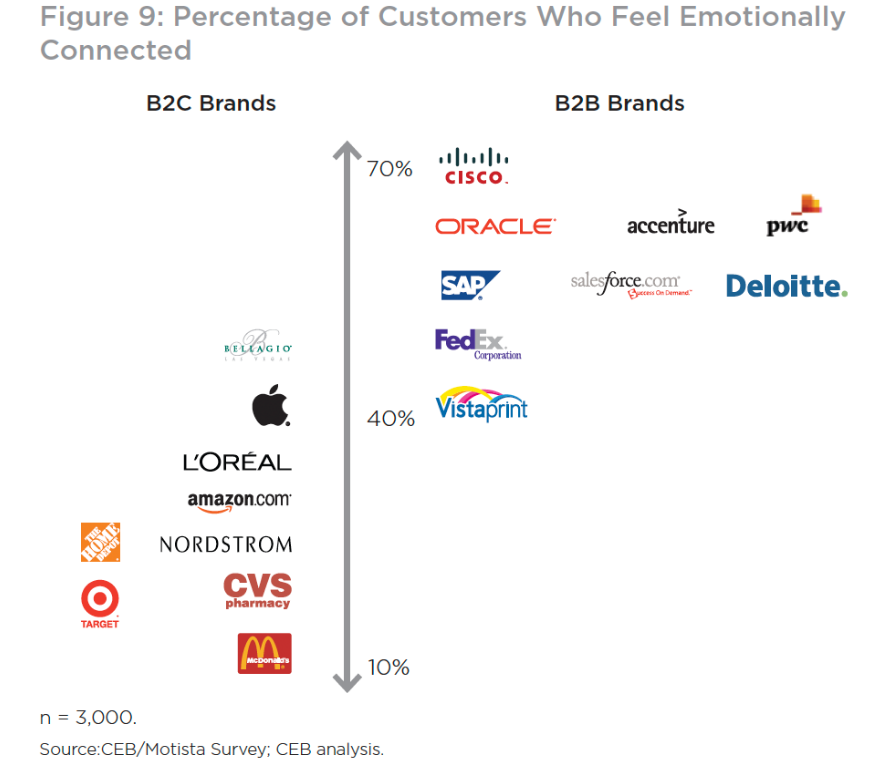
For many people, that’s surprising – but the reason is simple. It comes down to personal risk. If you buy the wrong L’Oréal lip gloss, it may be annoying, but you won’t lose your job over it. Choose the wrong enterprise software and you could damage your reputation, waste company money or even jeopardize your role. The stakes are higher, which drives a stronger emotional connection.
In our survey of over 400 B2B buyers across a dozen brands, we asked which brand attributes mattered most in their final purchasing decisions. Trustworthiness ranked number one, with reliability close behind.
What the Cracker Barrel backlash reveals about brand vulnerability
The Cracker Barrel episode is a stark reminder that even the most thoughtful, research-driven branding efforts can be derailed when they collide with today’s volatile digital ecosystem. The real story wasn’t a misstep by a seasoned agency or a logo that missed the mark – it was how bot-driven outrage can hijack a narrative and turn a routine brand refresh into a cultural flashpoint overnight.
For B2B marketers, the lesson isn’t to fear rebranding but to respect the emotional stakes involved. Buyers are more invested, more risk-averse and more attuned to signals of trust and reliability than we often assume. And while B2B brands may not receive the same amount of public attention as consumer giants, they operate in a space where reputational missteps carry significant professional consequences.
As lines blur between genuine sentiment, manufactured outrage and political polarization, marketers must approach rebrands with both courage and caution. Rebranding will always involve risk – but in a world where algorithms and bad actors can amplify negativity at scale, clarity, authenticity and stakeholder alignment have never mattered more.


