by Christina | Apr 14, 2026 | 2026, Marketing, Sales
Back when I was a client-side marketer, I noticed a pattern slowing our team down: the habit of holding onto work until it felt perfect.
To break that cycle, I led the team through what I called the “Embrace Your Suckiness” exercise – an honest conversation about what we were each great at, and where we genuinely fell short.
Out of that came the CRAP process: Create, Refine, Act, Perfect.
The rule was simple: if you got stuck at any stage, you passed it to someone else. It increased our speed to market and later that year we won an internal award for the best performing department.
We borrowed IBM’s 70% rule – get it to 70% and go. Let the market, the audience, the world complete the other 30%. Then we refined the campaign.
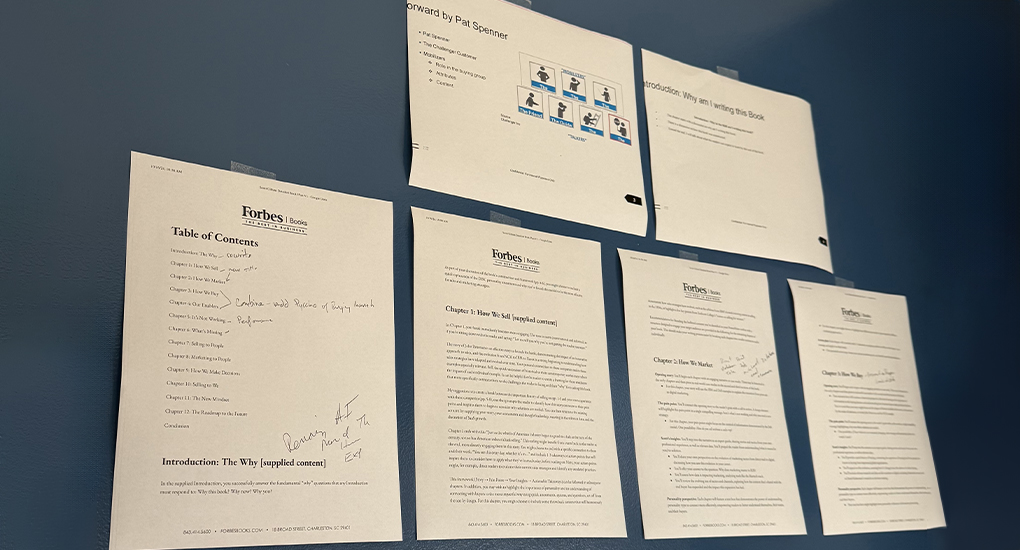
Fast forward many years, and I applied that same process to a book I just finished – three years in the making.
I sent the first draft to friends and family. What came back was hard to hear after all those late nights and weekends.
But that’s exactly the point.
The people who matter most told me: “It’s good… but it’s not good enough.” Good, because they appreciated the work and effort that went into it. Not good enough, because they respected me enough to push me further.
That feedback is a gift. And it only comes from people willing to tell you what you don’t want to hear.
If you’re early in your career, here’s the most important thing I can share: Surround yourself with those people.
Not people who echo your worldview.
Not people who validate everything you do.
People who are honest – even when it’s uncomfortable.
We live in a time that makes it dangerously easy to only hear voices that agree with us.
Don’t fall for it.
Here’s the truth: Everyone is great at something, and everyone sucks at something. That’s not a flaw – that’s just being human.
You may only have 70%. That’s okay. That’s why you need the right people around you to help you find the rest.
Embrace your suckiness. It just might be your greatest strength. 💪
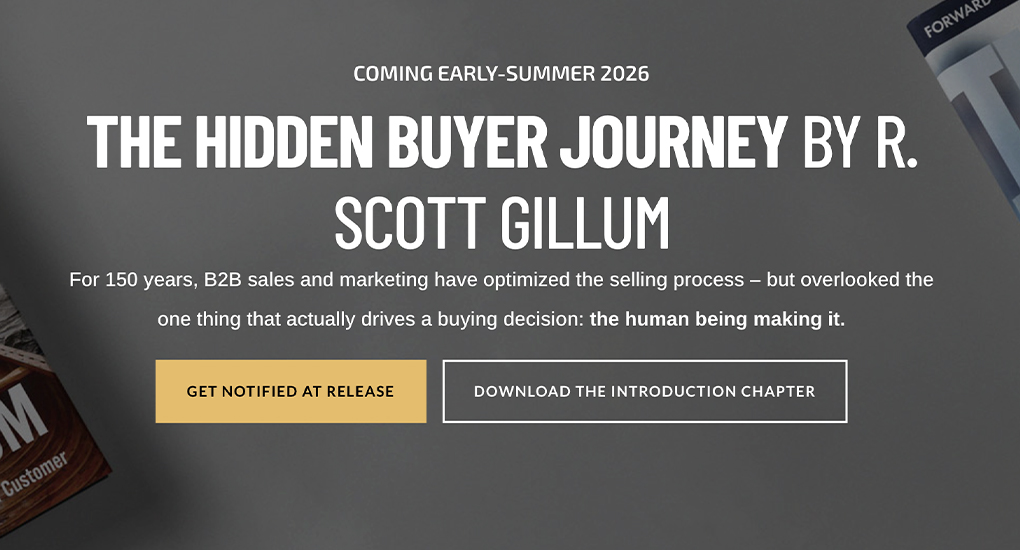
To learn more about The Hidden Buyer Journey click the link https://carbondesign.com/the-hidden-buyer-journey/
by Christina | Apr 3, 2026 | 2026, Marketing, Sales
After 7 years of research – analyzing hundreds of buyer journeys, profiling the personalities of thousands of decision-makers, and tracking what actually drives B2B deals – I finally finished the first draft.
Unlike other books in the sales and marketing space, this is not survey driven. We didn’t ask buyers for their preferences, we observed their behaviors in the data.
The work took longer than I ever expected, but every extra year added a layer of insight I wouldn’t trade. The 📕 title: The Hidden Buyer Journey.
Here’s what I discovered that changed everything:
● 85% of buyers influencing your deals never make it into your CRM.
● Most personas are built for selling, not buying.
● Corporate culture predicts deal velocity better than any other factor.
● Although there are a dozen or more buyers involved in the journey, only 4-5 make the deal happen.
● Reps can sabotage deals by not adjusting their style to fit the buyer’s personality.
These aren’t just interesting data points – they represent a fundamental shift in how modern B2B sales needs to be approached.
The book explains why win rates aren’t improving, why sales cycles are stretching, and why “personalization” isn’t working. More importantly, it shows exactly what to fix…and how.
I’ll be sharing more over the next few weeks. If any of this resonates with challenges you’re facing right now, follow along. You won’t want to miss what’s coming.
To learn more about the book and to reserve your copy visit https://carbondesign.com/the-hidden-buyer-journey/

by Christina | Sep 4, 2025 | 2025, Blog, Marketing
What if you ignored your “high intent” signals – didn’t follow up, didn’t call, didn’t email – just to see if leads would self-identify and reach out to you?
It sounds counterintuitive, but if a lead is really interested (at least according to your scoring tools), they should eventually fill out a form or call you, right? That’s the experiment we’ve been running.
For the past six weeks, we’ve been quietly tracking web traffic and running a test we know many of our clients would love to try but can’t. No outbound, no follow-ups – just observation.
The Setup
Using Warmly, we set our parameters around ICPs, buyer personas, and first- and third-party intent signals. For this experiment, visitors had to meet two criteria:
● Spend at least 28 seconds on the site
● Visit at least 2 web pages
The Results
After filtering out competitors and consults, 15 visitors from the last 45 days fit the criteria:
➖ 10 Moderate confidence lead
➖ 3 High confidence lead
➖ 2 Very high confidence lead
(“Lead” comes from the platform, not us. )
Our “highest intent” visitor came back to the site 24 times over two weeks, spending a total of 26 minutes across pages like Team, Services, Solutions, and Blogs. That person sounds like a qualified lead, right? We’re still waiting on a form submission.
So… Why Haven’t They Converted?
We dug deeper and found a few possible reasons:
1. Bad Data – when we looked into the contact records, some were miscategorized – for example, individuals associated with a company but are no longer employed there.
2. Wrong Personality Fit – using our proprietary personality profiling tool, we found that some visitors’ motivations were likely exploring on behalf of someone else, or just passively learning.
3. The Nature of Our Business – we don’t sell widgets. We offer services – thoughtful, consultative, relationship-driven solutions. Our sales cycle is longer and leans heavily on word-of-mouth. It takes time, trust, and timing.
Now let’s play this out and say we did hit the button on pushing them into Hubspot as a lead, as many organizations do every day.
The “leads” would make their way over to sales and be assigned to SDRs for follow up. Here’s the dirty little secret that marketing and sales knows but they don’t talk about.
Marketing knows those leads aren’t qualified but has a “lead target” to hit so off they go. Sales also knows that marketing knows those leads are qualified, but they have SDRs that need to be fed. This is the game that is being played across sales and marketing organizations every day.
Marketing with an increasingly vast number of tools and ways to capture anyone who merely glances at a website or email are able to capture more contacts than ever before. Tool providers using the wrong term “lead” for what is maybe at best a “response” are complicit in this charade.
Sales, which in the past would ignore (and still do in some ways) these non-qualified responses are now stuck with sales capacity they need to make productive. They’re using reps to qualify “leads” that aren’t leads, in the hope of making them leads. Sounds ridiculous right, because it is.
Even though they know the chances of a conversion are low, I’ve never met a sales manager that will give up sales resources voluntarily. The mentality of “the more reps I have, the better shot I have of making quota” is pervasive.
All of this to hopefully expose the charade so that sales and marketing can have a candid conversation about how ineffective the game is and finally take steps towards realistic performance goals.
The winner in all of this? Potentially everyone – marketing, sales and most importantly prospects who are just trying to learn who you are. and what you do, or to simply just read some content that you have posted.
Just because you can track every visitor doesn’t mean you should hand them off. Let your prospects explore. Let them learn about your company, your services, and your value – at their own pace. Let them raise their hand when they’re ready.
It’ll save your team time, effort, and energy – and likely lead to better conversations when the moment’s right.

by scott.gillum | Nov 2, 2021 | 2021, Marketing
It started with a simple question: why hasn’t B2B sales and marketing performance improved?
Despite advances in strategy and the industry’s massive investment in technology, the needle simply hasn’t moved over the last 10 years or longer.
Our curiosity led us to investigate this performance challenge. We noticed that our tools – mostly glorified task lists and activity trackers – were only picking up on rational factors. So we started to explore what wasn’t being tracked and discovered a “hidden buyer journey”.
As we explored buyer behaviors, motivations, and personality types, we found that purchase decisions made by buying groups were driven by individuals’ personal motivations, not titles or roles.
For two years now, we’ve been using research on buying groups and AI-enabled Personality-Based Marketing to help clients improve their sales and marketing efforts.
This eBook shares our insights and how you can apply Personality- Based Marketing to improve your B2B marketing performance – at last.
Download the E-Book now!
Sorry. This form is no longer accepting new submissions.

by scott.gillum | Oct 1, 2021 | 2021, Marketing, Sales
Scott was a guest speaker at the WVU Marketing Horizon podcast, a sub-series of WVU Marketing Communications.
Marketing Horizons is forward-thinking, looking ahead, through the front windshield and beyond, into the marketing future. Hosted by Cyndi Greenglass and Ruth Stevens, Horizons is a podcast dedicated to looking ahead to the new ideas, technologies, tools and strategies that are emerging to help marketers navigate over the marketing horizon.
Listen here. https://bit.ly/2ZNfYpC

by Christina | Sep 15, 2021 | 2021, Marketing, Sales
As previously published on 9/9/21 in The Drum
by Scott Gillum
Estimated read time: 5 Minutes
I went for a bike ride on a trail that I’ve traveled many times but have avoided lately because of the ‘Covid crowds’.
Taking off in a southern direction on the 10-foot-wide path, my focus was on the bike computer between the handlebars. As typical, I was locked in on my speed and spin rate. Knowing the scenic path along the Neuse River well, I put my head down and focused on my performance.
That was until I ended up in a parking lot. Trying to piece together where I was and how I got there made me realize that I didn’t notice any of my typical landmarks, which then caused a bit of a panic.
Pulling my phone out to unravel the mystery, I discovered that the focus on my performance put me two miles past my usual turnaround spot. After figuring out the situation, I decided to keep my head up on the return.
As I pedaled back, I noticed that a scenic overlook, which served as an important landmark, had been expanded and recently landscaped. The biggest surprise, which was somewhat startling, was a 100-yard clearing of trees for the expansion of a housing development not more than 30 feet off the trail.
The scenario I just described is not unlike what happens with our audiences during their workday. They step on to the 10-foot path that is their job in the morning and travel it like a well-worn trail to their usual destination.
Their computers narrow their focus and attention even more, just like my bike computer. It’s a heads-down routine that often makes them oblivious to changes all around. This creates an opportunity for us to discover new insights that enable us to redefine our position and messaging that gets their attention.
A ‘locked-in’ mindset makes us vulnerable to bias and blind spots. The longer someone has been in the job or industry, the more likely they are to believe they know ‘the path’. The brain seeking to reserve ‘brain power’ moves routine tasks to a part of the brain that requires little cognitive energy. This is the reason I ended up in the parking lot on a trail I thought I knew well.
As a result, we can bring new insights to this audience. Typically, there are three fertile areas to explore:
- The unknown. This is the typically the hardest to discover, but the most powerful.
- The underappreciated. What has changed that makes something known more impactful or significant?
- The undervalued. What are they missing that may be impacting their success, their mission or their customers?
Depending on our audience’s personalities, some of these areas are more impactful than others.
For example, on the way down the path I kept my head down and focused on my performance. This very much aligns with a personality type that is career driven. We can gain their attention through messaging that alerts them to something ‘unknown’ down the path.
If that audience segment only focuses on one or two things that they believe drive their business or performance, like my speed and spin rate, what can you tell them about the importance of understanding another factor?
What is on their ‘path’ that they may be missing, like a parking lot two miles from the usual turnaround spot? What ‘unknown’ is just over the horizon that may impact their success?
On the return journey, my behavior was like another key audience that is constantly scanning the horizon for new things to share with others. They will be looking for the changes to establish ‘landmarks’ to share, like me telling a neighbor who also bikes the trail about my discovery of the construction area.
This audience segment seeks and brings new information into the organization. They’re not as focused on the ‘path’ as much as they are on what is happening around it. As a result, that typically leads them to sharing information highlighting the undervalued or underappreciated.
In both cases, the new information I gained will change my behavior and will cause me to act, which is the goal of marketing. The new construction will disrupt my biking experience. In the future I will avoid that section of the ‘path’. I also now have a new appreciation for checking the distance traveled, and occasionally picking my head up to determine where I am along the trail.
Buyers ‘lock in’ every day at work, and a message right in front of them on the well-worn path will not disrupt. They’ll ride over like a bump on the trail. To capture their attention, search off their beaten path and over the horizon. It’s what they don’t see, or realize, that matters – because no one wants to end up in a parking lot.


